Which cargo bike is right for me and my dog?
When choosing, these questions are particularly important:
- How big and heavy is your dog?
- Can he get in and out independently?
- How much space does he need to sit or lie down?
- Are you riding short everyday routes or longer tours?
- Should additional luggage or shopping be included?
- How important are low entry and ground height?
- Does the bike need to be particularly compact?
- Do you mainly ride in the city, countryside, or also on forest and gravel paths?

Low entry:
independent and comfortable entry
Especially for larger, older, or less mobile dogs, a low entry can be a decisive advantage.
The dog can get in and out as independently as possible and does not have to be lifted into a high box every time. This is often more pleasant in everyday life – for the dog and for the person using the bike.
In addition to the pure entry height, a secure standing area, sufficient space, and an entry that the dog can easily accept are also important.
Large transport box:
plenty of space to sit and lie down
For larger dogs or longer journeys, the actually usable area is crucial.
A large transport box offers enough room to sit, turn around, or lie down and can also create space for luggage or shopping.
Therefore, it is not only the volume of the box that is important, but especially its shape, the base area, the floor quality, and suitable securing options.
Trike:
stable when getting in and out
A tricycle can be particularly interesting when a stable stand is important.
The bike remains independently standing when getting in and out and does not need to be held and balanced at the same time. This can make everyday life easier, especially for larger, heavier, or initially insecure dogs.
Many tricycles also offer generous transport areas.
The handling, however, differs significantly from a classic bicycle or two-wheeled cargo bike. Therefore, not only the dog but also the rider should definitely try out the concept.
Safe and comfortable on the go
a good dog cargo bike must be able to do more than just provide enough space.
When selecting, we therefore pay attention to:
- a sufficiently large and non-slip standing or lying area,
- appropriate securing options,
- a stable position when getting in and out,
- protection against the dog jumping out during the ride,
- enough space to sit, turn or lie down,
- a pleasant entry situation,
- and equipment that suits your actual routes.
Especially on longer distances, it also matters whether the dog can lie quietly and is sufficiently protected.
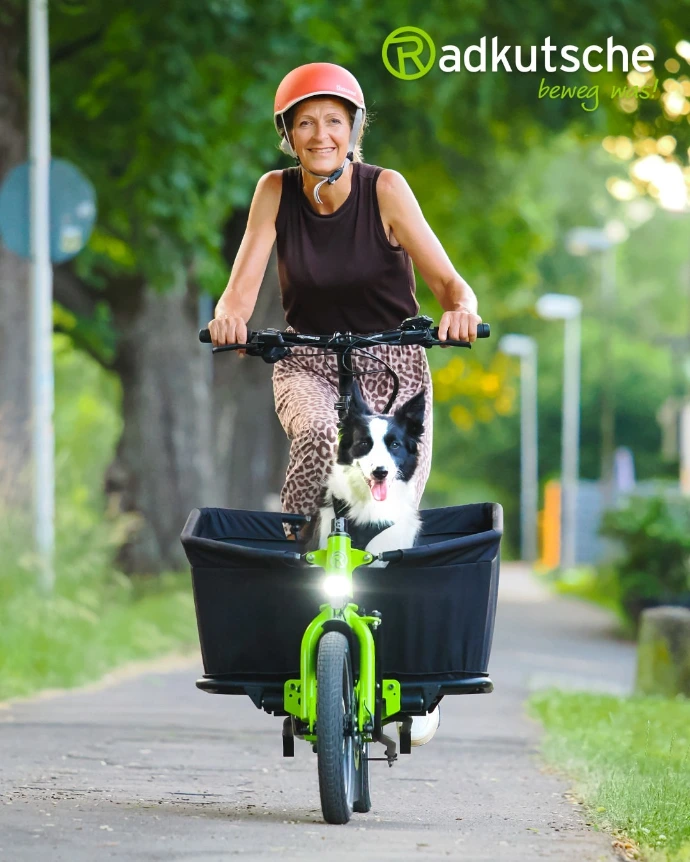
How do I get my dog used to a cargo bike?
Not every person and not every dog feels completely safe on a cargo bike right away. This is completely normal – and that’s exactly why everything doesn’t have to work perfectly on the first test ride.
At the beginning, the rider comes first. They should get to know the bike, develop a feel for steering, braking, weight, and handling, and be able to move confidently with it.
Because this confidence also transfers to the dog.
If you handle the cargo bike calmly and confidently, it will be much easier for your dog to develop trust in the new situation.
The actual acclimatisation can then take place with the appropriate bike in peace at home and in a familiar environment: initially on a stationary bike, later with short rides and finally on longer routes.
How quickly this works varies from dog to dog. What matters is not that everything goes perfectly on the first test ride, but that you find a combination that allows both of you to feel comfortable in the long term.
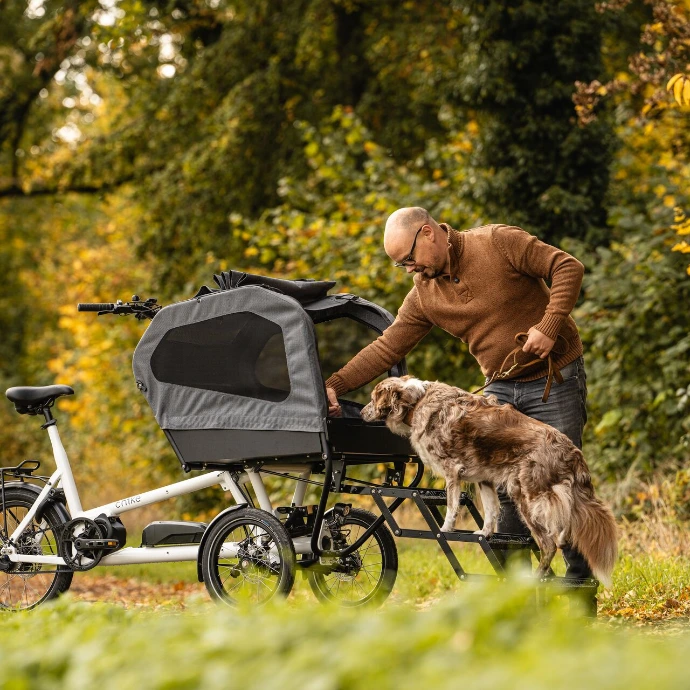
Size, age and mobility play a role
A small, light dog has different requirements than a large dog weighing 25 or 30 kilograms.
Age and mobility can also be crucial.
A young dog can easily jump into a higher box, while an older dog may rely on a low entry. For larger dogs, the usable floor space becomes significantly more important than for small dogs.
That’s why we not only look at the bike during the consultation, but always also at the dog that is actually going to ride.
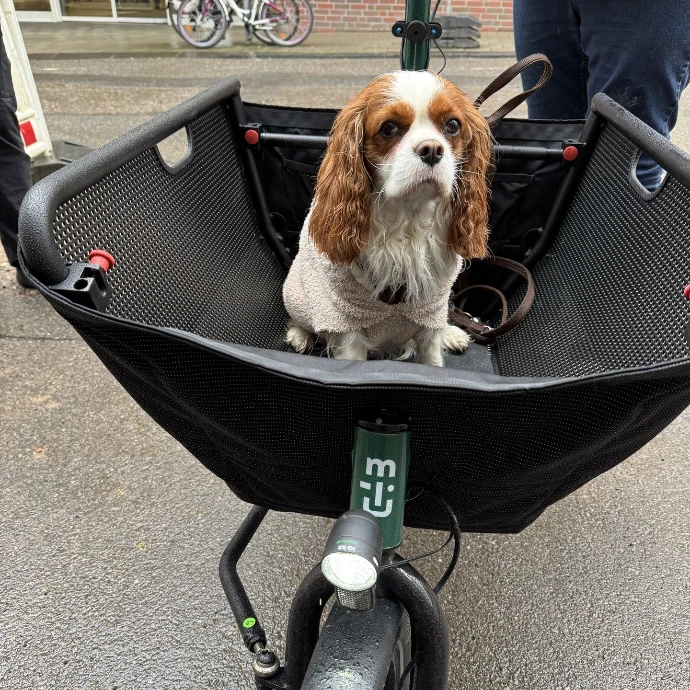
Everyday life, outing or longer tour?
Your typical routes also influence the selection.
For short city rides, a very compact cargo bike can be particularly pleasant. Those who regularly go on longer tours may pay more attention to comfort, range and a large lying area.
And if you often travel on forest paths or rougher terrain, the suspension, tyres and ride stability play a bigger role.
The right dog cargo bike is therefore always a combination of dog, route and everyday life.
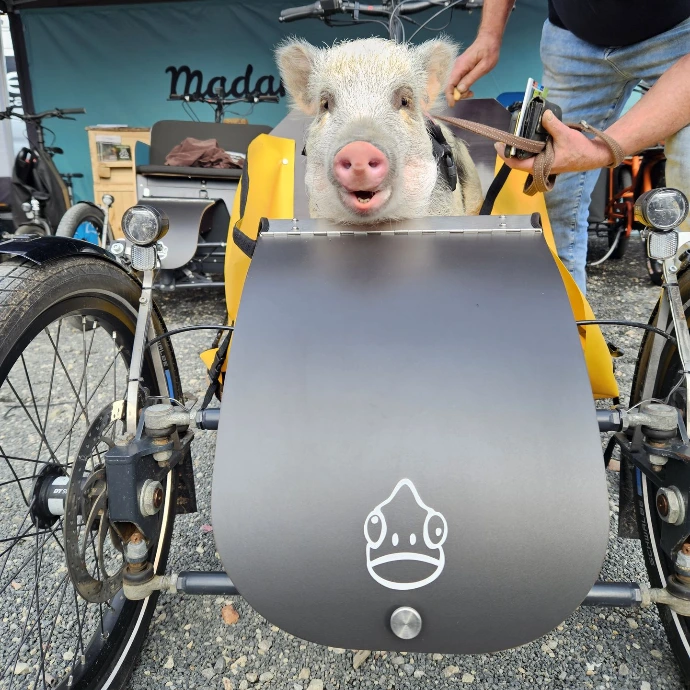
Also out and about in the rain
Suitable for any bad weather (😉). The joke with the pig only works in german ;) "Sauwetter"
Those who use the cargo bike regularly do not only ride in sunshine.
Depending on the model, there are rain covers, tarpaulins or protected transport areas that can shield the dog from wind and weather.
Especially on longer journeys, it is worth ensuring that the passenger area remains not only dry but also sufficiently ventilated.
Test rides and trying out together
Cargo bikes for dogs should not only be chosen based on pictures or technical specifications.
How easily does the dog get in? Does it stay calm standing or lying down? Is there enough space? And does the bike feel safe and comfortable for you even with additional weight?
If possible, your dog should therefore come along for the test ride. Dogs are of course welcome to join us!
This way, we can check together which solution actually works for you.
If you are still wavering between several concepts or models, we recommend our cargo bike purchasing advice with test rides.
If you already have a specific model in mind, you can book a model-specific consultation with test ride.
Especially interesting for dogs:
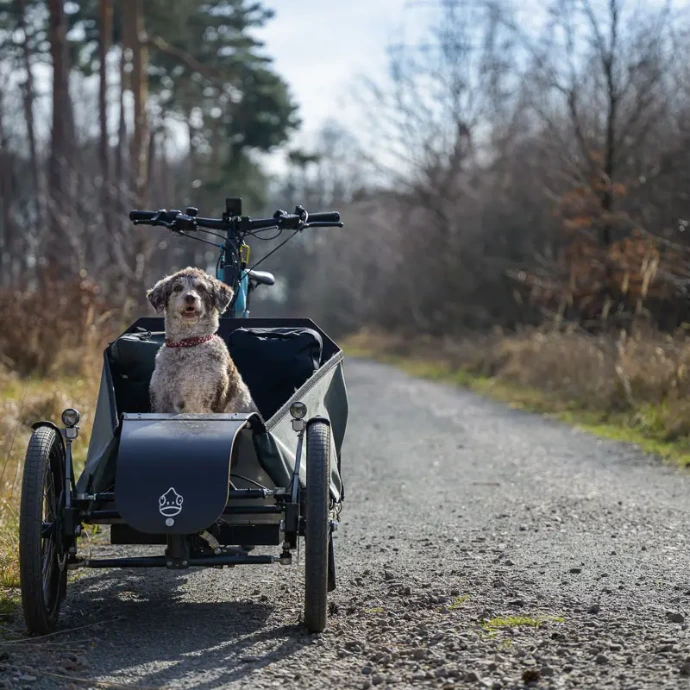
Mäx & Mäleon Dog Transporter
Generous passenger space and low entry make it particularly interesting for larger dogs and comfortable shared rides.
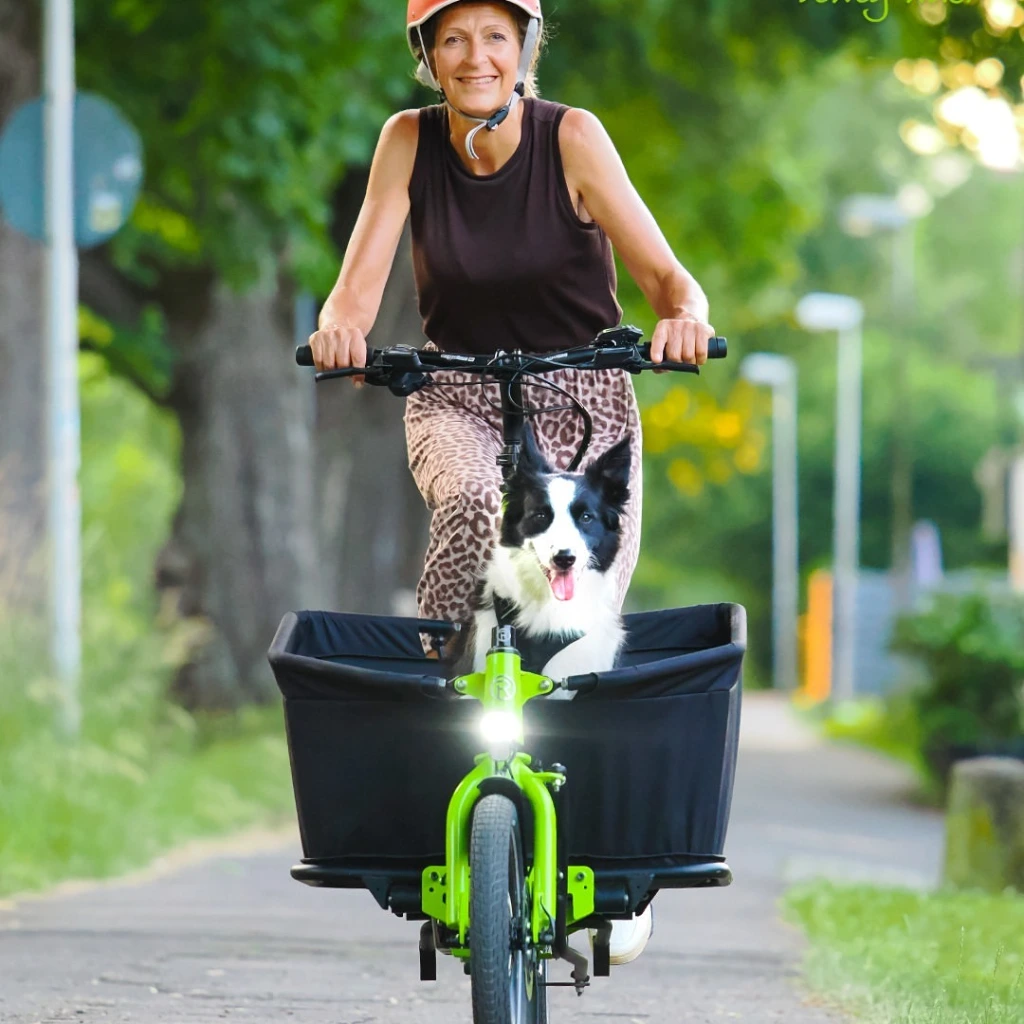
Radkutsche VIVID
Plenty of space and a low entry make the VIVID a strong solution for small to medium dogs and versatile everyday use.
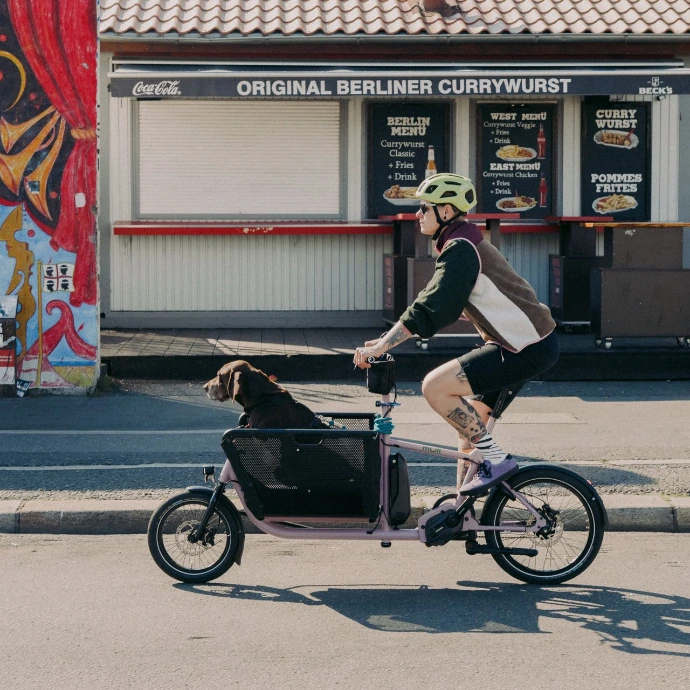
muli cycles motor st (pro)
Especially compact and manoeuvrable, with a low entry – ideal when space is limited and the dog should be able to get in by itself.
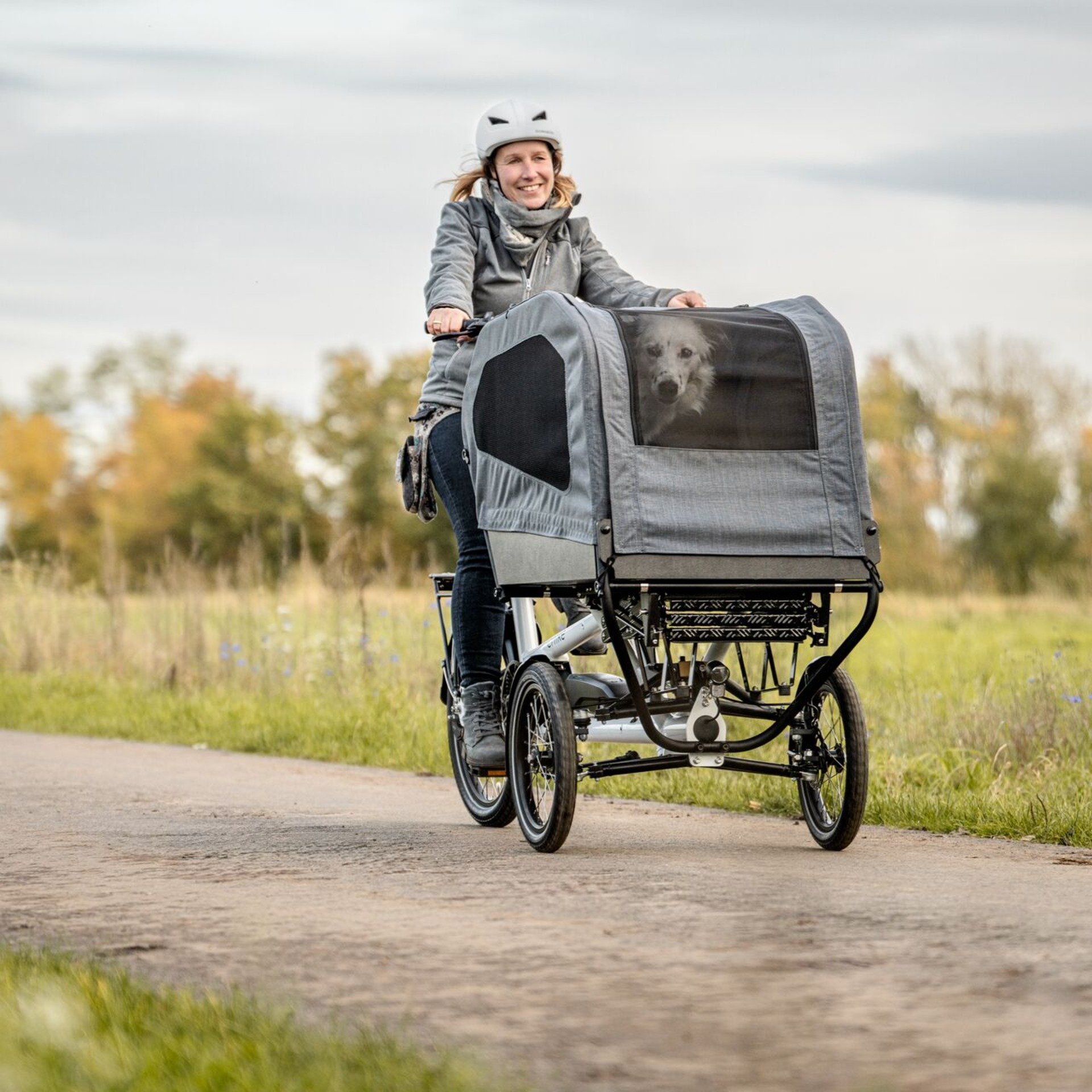
chike e-dog
Compact tricycle with stable stand and low entry, particularly comfortable when getting in and out.
Cargo bikes for dogs at Madame Cargo in Aachen
Madame Cargo is your cargo bike specialist shop in Aachen.
At Madame Cargo, you will find different cargo bikes suitable for dog transport – from the particularly compact model with a low entry to the large cargo bike with plenty of space.
Which one suits you best depends not only on the weight or size of your dog.
What matters is that the dog, bike, and your daily routes fit together.